
Independence referendums for the UK's constituent countries?
Secession is the correct word

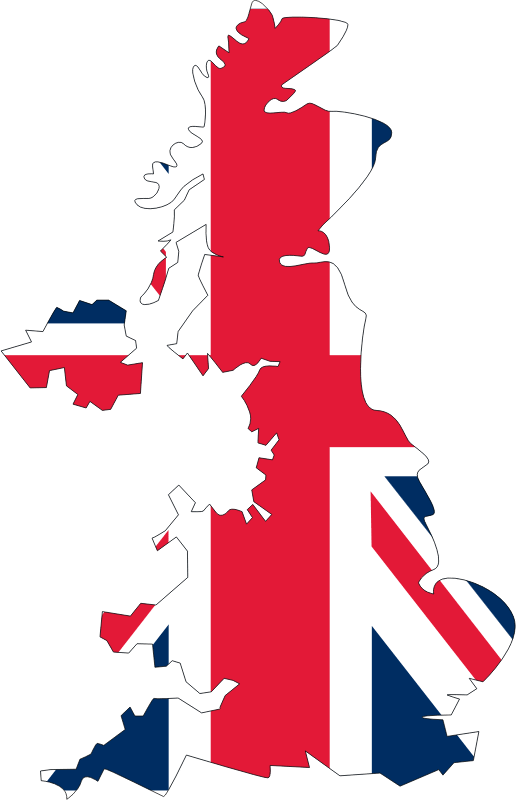
Legally speaking, there are no constituent countries in The United Kingdom. The separate kingdoms of England and Scotland were legally abolished by the 1707 Acts of Union and replaced by the single Kingdom of Great Britain. Contrary to the popular modern myth, there never was a partnership, equal or otherwise. The text of the Acts is readily available online for anyone to read who doubts this.
Wales had been incorporated into England for administrative purposes in The Middle Ages. The province of Northern Ireland was reincorporated into the United Kingdom after it declined to participate in an independent Ireland after The First World War. The United Kingdom is not even a federal state; legally it is a unitary state, and The UK Parliament is the supreme authority of the whole national territory.
In spite of all the above, the UK is a rarity in having offered an independence referendum to Scotland upon request. Canada had previously done the same with Quebec, but New World countries are not normally amalgamations of previously independent countries in the way that Old World countries are. It is worth noting, in passing, that inward investment into Quebec was adversely affected by the demand for referendums; investors do not like perceived political instability, especially in areas that are easily supplied by external depots, a circumstance which Quebec and Scotland have in common.
All large European countries have been formed by amalgamation of previous states. In Germany and Italy, these amalgamations were much more recent than 1707, yet in spite of this, no-one today regards Prussia or Piedmont as countries. The UK is unique in using this terminology for its formerly separate entities.
However, even in Great Britain, the process of amalgamation that preceded the final amalgamation of 1707 did not preserve the colloquial nomenclature “country” for previous national entities. No-one thinks of Wessex and Mercia as countries today, though they once were. No-one even thinks of Alba as a country north of the Highland Line, though it was, after Kenneth the Hardy united the previously independent Scottish colony of Dalriada with Pictland. I happen to live in Manaw-Gododdin, adjacent to Gododdin, the main kingdom of the north-eastern Britons. Edinburgh and the Lothians were once part of the Angle kingdom of Northumbria, while Strathclyde was a Brythonic kingdom that stretched south to the borders of Wales. Interestingly, the Welsh royal line was founded by Cunedda, who was himself Gododdin, back in the days when Britons lived everywhere in a great arc from Edinburgh to Cardiff.
What is currently known as the Anglo-Scottish border is nothing more than an ossified medieval truce line between the great northern and great southern amalgamation movements within the island called Great Britain. It is where the two of them fought each other to a standstill, leaving each in possession of around half of previously independent Brythonic Strathclyde and Angle Northumbria.
1707 actually reunited these two divided kingdoms, in each of which the northern and southern inhabitants had, and still have, more in common with each other than either had with the peoples to their north and south with whom they had previously been forcefully amalgamated. In fact the border even divided families, and the Border Reivers regularly pretended to be Scottish when fleeing from English jurisdiction and vice versa.
In three hundred years of being a single country, internal migration and miscegenation have pretty much eradicated most genetic differences in Great Britain too.
Meanwhile, any amount of services are provided to the whole country from single administrative points; a single currency makes it as difficult to withdraw from the UK as the Eurozone makes withdrawal from most of the EU; the dead loss expenditure required to duplicate all those common facilities, and start a new currency, makes separation very expensive indeed, (please bear in mind that the currency is just as much a common institution as anything else and belongs to the whole country, not a separating part), and the lack of economies of scale means the tax burden required to do all this for five and a half million people within any reasonable space of time should be prohibitive to all but the most desperate nationalists. Existing small countries have built up their modern facilities over the course of their history, not overnight.
Logic also suggests that there was nothing special about 1707 that was not true of earlier amalgamations. If Scotland deserves a series of referendums, causing further economic destabilisation, then there is no reason why the still very Scandinavian Northern Isles should not have a vote on their own independence. They were added to Scotland very late in its history and, freed from the burden of welfare dependence that prevails on the mainland, they could be among the richest countries in the world per capita. The Border counties should also be offered the choice of whether to go with Scotland or England.
In fact, when you get right down to it, Gododdin for the Gododdins, I say. Let’s hear it for Falkirk, capital of Manaw.
.
.